

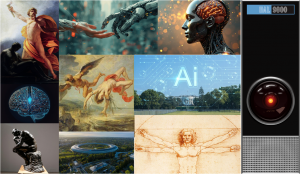
Humanity at the Frontier:
AI, Prometheus, and Icarus
Dean Ball, Yale University
Antón Barba-Kay, Harvard University
Mathis Bitton, Harvard University
EverScholar in San Francisco
July 9-12, 2026
$2795 per person
Course has completed – watch for information on a possible additional edition in 2027!
A new technology is upon us, and all our assumptions about our world are seemingly in question. There is a sense among us that – like Prometheus – we have been driven, perhaps even compelled, to conquer, master, and remake nature, only to find our creation poised to wreak havoc.
Is this an unavoidable part of the human condition?
Are we to be masters of the world to come?
Artificial intelligence is everywhere in the headlines. We hear about revolutionary breakthroughs, existential risks, miraculous productivity gains, and the imminent transformation of nearly every domain of life. The conversation oscillates between breathless optimism and apocalyptic anxiety. Yet for all the noise, the deeper questions raised by artificial intelligence are rarely examined carefully or thoughtfully.
Indeed, many of the same questions, worries, and fears were voiced with the advent of the printing press; with the telegraph; and with the internet. Once again, we ask: is this the human condition; is Prometheanism an essential part of humanity? Or have we, like Icarus, taken a valuable human capability, and allowed hubris to turn it into the means of our eventual doom?
In this latter sense, AI seems different because it is not only a tool that can disrupt; it beckons towards replacing us. We therefore seek to dominate it. To govern it. Ultimately, then, the fundamental questions of AI are questions of humanityand its relationship to technology, but they are also questions of self-governance: the political question of how a democracy, or any government, governs a technology that moves faster than its institutions, and the personal question of what human agency means when machines can do more of what we do.
At EverScholar, where we explore the most consequential ideas led bythe world’s most compelling scholars, we approach the topic differently. Rather than treating AI as a technical subject for engineers, this program examines artificial intelligence as a defining intellectual challenge. A phenomenon that touches political institutions, cultural life, philosophical traditions, and the meaning of human agency itself.
For this immersive long-weekend program, EverScholar has assembled an extraordinary faculty whose work spanpolitical philosophy, technology policy, intellectual history, and cultural analysis. Together we will explore artificial intelligence not merely as a tool, but as a profound development in the long human story of technology, knowledge, and self-government.
Our inquiry will move across disciplines and centuries. We will consider the intellectual roots of modern technological ambition, the political institutions that enable innovation, and the enduring human questions raised whenever new powers reshape our relationship to the world.
Dean Ball, a leading thinker on AI governance and former advisor on artificial intelligence at the White House Office of Science and Technology Policy, guides our exploration of the political and institutional challenges created by this transformative technology. Artificial intelligence, he argues, is not only a technical innovation but a test of democratic self-governance itself. How can political institutions regulate and guide a technology that evolves faster than legislation or bureaucracy? And what happens when the systems we build begin to play a role in governing society themselves? Drawing on history, political economy, and contemporary policy debates, we will examine whether the American institutional tradition that once governed railroads, electricity, and biotechnology is capable of meeting this new technological frontier.
Antón Barba-Kay, philosopher and cultural critic, invites us to step back and ask more fundamental questions about technology and human life. Digital tools have quietly reorganized almost every dimension of modern experience: politics, education, identity, work. Even our understanding of intelligence itself. Yet public discussion of these transformations often proceeds through clichés: that technology is neutral, that more choice is always better, that automation simply frees us to focus on “what really matters.” With Antón, we will challenge those assumptions and ask deeper questions: What is a technology? What kinds of political and cultural forms do technologies encourage or undermine? And how might the digital world be reshaping our understanding of what it means to live a human life?
Mathis Bitton, Harvard political theorist, brings a historical and philosophical perspective to the technological imagination itself. The ambition to conquer, master, and remake nature is hardly new; it stretches from Francis Bacon to the space race and onward to Silicon Valley. Yet this Promethean impulse has always generated both hope and anxiety:Are we fulfilling humanity’s creative potential when we build ever more powerful technologies, or are we courting dangers that exceed our wisdom? Through readings that range from Bacon to John F. Kennedy to contemporary debates about transhumanism and artificial intelligence, we will examine the ideals and limits of technological progress.
Together these perspectives allow us to approach artificial intelligence in a truly interdisciplinary, or, if you will, a humanist way. We will examine the political institutions that shape technological innovation, the cultural and philosophical frameworks through which societies interpret new technologies, and the enduring human questions that arise when machines begin to perform tasks once thought uniquely our own.
As always at EverScholar, this program will bring together a small cohort of intellectually curious participants for an intensive, discussion-based experience. Prior to the course, you will receive a carefully curated reading list that mixes classic texts with contemporary essays. Our time together will center on a series of highly interactive seminars led by our faculty, designed not as lectures but as conversations among engaged readers and thinkers.
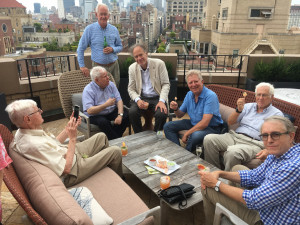
Of course, the EverScholar experience extends well beyond the classroom. Meals and informal gatherings provide opportunities to continue the conversation with faculty and fellow participants, often well into the evening. Friendships form, ideas circulate, and the life of the mind flourishes in a uniquely collegial atmosphere.
Artificial intelligence is often presented as a purely technological revolution. But in truth it is something much larger: a turning point that forces us to reconsider the nature of knowledge, creativity, work, and human freedom. This program offers a rare opportunity to explore these questions thoughtfully, in the company of leading scholars and curious peers.
We hope you will join us for what promises to be a fascinating and illuminating intellectual journey into one of the most important developments of our age.
Our Faculty:
Distinguished Fellow, Georgetown Law School
Fellow, Harvard Kennedy School
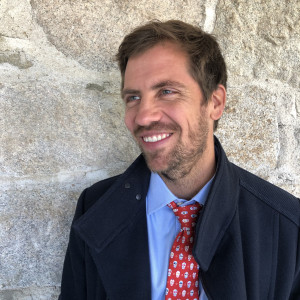
Antón is a fellow at the Carr-Ryan Center at the Harvard Kennedy School, a senior fellow at the
Institute for Practical Ethics at UC San Diego, and a distinguished fellow at the Center on Privacy and Technology,
Georgetown Law. He is the author of A Web of My Own Making — an “everything” book about the digital
transformation—which was published in 2023 by Cambridge University Press.
Lecturer, Yale Law School
Former Senior Policy Advisor for Artificial Intelligence, White House Office of Science and Technology Policy
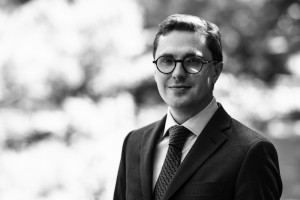
Dean W. Ball is a Senior Fellow at the Foundation for American Innovation and founder of Manifold Advisory. He recently served as Senior Policy Advisor for Artificial Intelligence at the White House Office of Science and Technology Policy, where he was the principal drafter of America’s AI Action Plan. He is a guest lecturer at Yale Law School, where he co-organizes the Colloquium on Frontier AI Governance, and writes Hyperdimensional, a widely read newsletter on AI policy and governance
Minda de Gunzburg Center for European Studies
Department of Political Theory, PhD Candidate, Harvard University
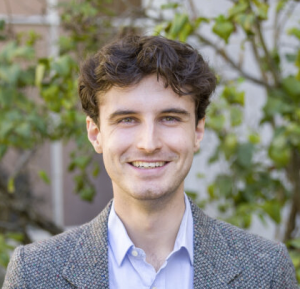
Mathis Bitton is a Ph.D. candidate in political theory at Harvard University. He is the co-author of the forthcoming book A Bounded Web: Platforms and the Crisis of Social Life (with Cambridge University Press). He is broadly interested in the history of technology, Chinese thought, and romanticism. Mathis co-founded and ran a cybersecurity startup. His dissertation traces the intellectual history of technological progress from Francis Bacon to Silicon Valley.
Readings
All EverScholar courses actually start months before our meeting. After registration, you will receive all books and scholarly articles for the course, and will immerse yourself in great works curated by our faculty. “Humanity at the Frontier” is no exception, with works ranging from contemporaneous writings to great books written by your own EverScholar professors. Primary sources will mix with authoritative texts to produce night after night of joy as you prepare for your return to the life of the mind.
Special Events
One of EverScholar’s unique and most beloved features are our Special Events; sessions at a number of well-known (such as a museum or Art Gallery) or less-known centers of collection and learning. “Humanity at the Frontier” continues this tradition. Details of the Special Events for this program will be provided before the program begins, but we anticipate a robust program with a visit to an important AI firm to meet with key executives regarding the moral behavior of their products. We also expect to visit a robotics-related site, again with access only available through EverScholar.
Beyond the Classroom
Everything that happens during an EverScholar program is enhanced by the fact that it takes place in a learning-promoting environment.
This program will take place in San Francisco and environs. EverScholar will arranged for a discounted block of rooms at an excellent hotel in San Francisco – indeed, you will be surprised at the reasonableness of the rate we will announce and the beauty of the hotel. The learning environment will enhance our classes both in beauty and the nature of the location.
Learn more about the experience!


The course begins with a reception and dinner on Thursday…. and ends in late afternoon Sunday. The program cost is $2,795 per person. Deposit is $500 per person. Balance is due on May 15, 2026. Cancellation refund and COVID-19 refund policies are detailed on the registration page – so you can register without worries.
All EverScholar program attendees are required to be fully “up-to-date” on covid vaccination; we also request rapid testing on the day the course begins.
Looking forward to seeing you there!