

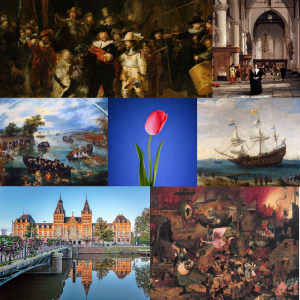
The Golden Age of the Netherlands
Amsterdam and The Hague
An EverScholar Residential Seminar in the Netherlands
October 10-18, 2026
“Look around, look around, at how lucky we are to be alive right now.” So sang the Schuyler sisters in Hamilton, but they might as well have been residents of the Dutch Republic of the 17th century.
In fact, the Schulyer sisters were of Dutch descent; 4th generation settlers whose direct ancestors were recruited to the “New Netherlands,” by the Dutch West India Company, the sister of the vast Dutch East India Company, which may in fact have been the wealthiest company in all history.
This corporation, empowered not only for trade but for war, emerged in a magical moment in an unlikely place, as part of not one, but many phenomena new to the world. Indeed, those Schuyler sisters sang of and beheld the aftermath of a Great War of independence – so, too, their ancestors, breaking free of their Spanish masters in an 80-year military struggle. The society that emerged, the Dutch Empire, saw the absence of a true aristocracy; world-changing economic innovation; the absence of a ruling monarch; breakthrough religious toleration; and an influx of immigrants.
So those Schuylers might not only have been singing about their own moment and land, but the society that prefigured so many of these changes. Not the “New Netherlands,” but the Netherlands themselves.
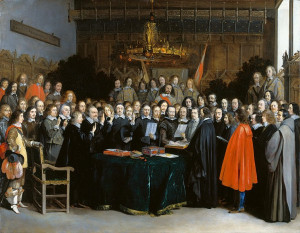
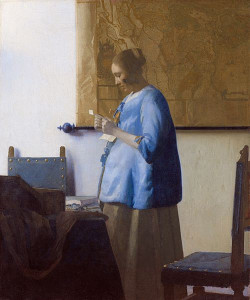
This amazing entity exploded with innovation and creativity, from new ship designs to the genius of Rembrandt.
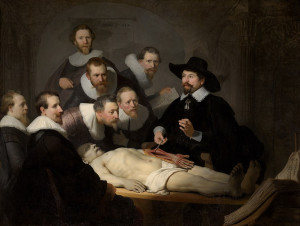
The Dutch had the first joint stock company and one of the earliest stock markets.
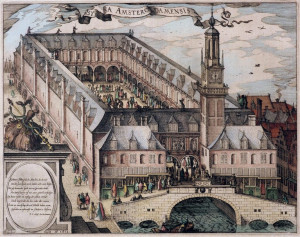
The Dutch welcomed Jews, Protestants, the great Enlightenment thinkers, scientists – the greatness of Europe and beyond. International law was invented there and then; it had to be, as a new crossroads of the world came into being. America took inspiration from all of this a century later creating a society of immigrants, the Bank of the United States, and encouraging artistic pursuits.
EverScholar invites you to immerse yourself in a time and place that rivaled Ancient Rome and the Italian Renaissance as a time of human advancement.
You will learn together with a team of scholars that combine disciplines just as this age of mixing did. Economic history; art history; political history; cultural and social history; and legal history – all made enormous strides at once, and our faculty span those areas and more.
There is a remarkable concentration of institutions related to these developments in this small area. Museums, palaces, architecture, religious structures, memorials, and of course, the ever-present water. We will see them together, in the intimate, EverScholar-level elite access that our programs invariably achieve.
We will have the joy of months of preparation as our faculty provide us with an EverScholar-curated set of readings. Fascination awaits you each day in advance of the program as you encounter readings that you would never have known of, but for our faculty’s expertise and efforts. And in the Netherlands, as we immerse ourselves in this fascination, we will enjoy wonderful accommodations and the finest food, to facilitate our conversations with our faculty and each other.
Join us for an unforgettable week. You will emerge with another place that you love, another set of memories that you treasure, and another perspective you never had and never would have gained but for this great decision you will make: to “look around, look around” with your EverScholar community in the Netherlands this October.
Our Faculty
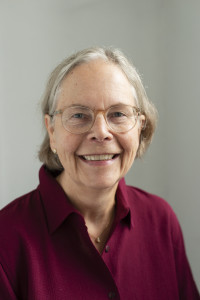
Professor Emerita
Queen’s University
Stephanie Dickey is a researcher, author, teacher, consultant, and curator based in Indianapolis, Indiana. She retired in 2024 as Professor of Art History and Bader Chair in Northern Baroque Art at Queen’s University in Kingston, Canada, and previously taught at Indiana University. Stephanie’s research explores the history of collecting, innovations in the art of printmaking, portraiture in its cultural context, and representations of gender, emotion, and artistic identity in the work of Rembrandt van Rijn and his contemporaries. Her publications include twelve volumes authored or edited, numerous book chapters, and essays in peer-reviewed journals such as The Art Bulletin and Netherlands Yearbook for the History of Art. She has contributed to exhibition projects for the Metropolitan Museum of Art (New York), the National Gallery of Art (Washington, DC), the Rembrandt House (Amsterdam) and other museums in North America and Europe. Stephanie has served as President of the international scholarly organization Historians of Netherlandish Art and as an External Advisor to the National Gallery of Canada. She is currently editing a book of essays on Rembrandt and the imagery of everyday life, to be published by Routledge in 2027.

Senior Lecturer and Director of Undergraduate Studies, Humanities program
Yale University
Paul Grimstad is Senior Lecturer and Director of Undergraduate Studies in the Humanities program. He is the author of Experience and Experimental Writing: Literary Pragmatism from Emerson to the Jameses (Oxford, 2013) which won Yale’s Ronnie and Samuel Heyman prize for outstanding book by junior faculty. He also received Yale’s Sarai Ribicoff ’79 teaching prize for “instruction and character that reflect the qualities of independence, innovation, and originality.” He has contributed chapters to The Jamesian Mind, The Cambridge Companion to Ralph Waldo Emerson, the Oxford Handbook to Edgar Allan Poe, Melville’s Philosophies, Stanley Cavell and Literary Studies, the Oxford History of the Novel. He also writes regularly for the London Review of Books, The New Yorker, n+1, The Paris Review, Music and Literature, The New Republic, Times Literary Supplement and other journals and magazines. His “Miles the Mercurial” was a notable selection for Best American Essays of 2021 (Harper Collins). His next book Interested in Everything and Nothing Else: On the Polymath is under contract with Princeton University Press. He has taught in multiple EverScholar events to great acclaim.
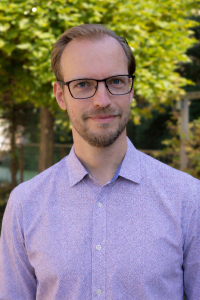
Professor of Finance
New York University Stern School of Business
Peter Koudijs is Professor of Finance at the New York University Stern School of Business and holds a part-time appointment as Professor of Finance and History at Erasmus University Rotterdam. His research focuses on financial history, using historical events and long-run developments to generate insights relevant to modern finance, with particular interests in corporate finance, financial intermediation, and market microstructure. His work has been published in leading journals including the American Economic Review, Journal of Political Economy, Quarterly Journal of Economics, Journal of Finance, Journal of Financial Economics, and Journal of Economic History. Koudijs earned a master’s degree in Economics and History from Utrecht University and a PhD from Universitat Pompeu Fabra, and has received major research grants from the Institute for New Economic Thinking as well as the European and Dutch Research Councils.
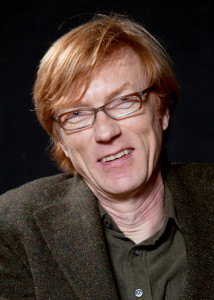
Professor of Social and Economic History (ret.)
Utrecht University
Maarten Prak was, until his retirement in 2022, Professor of Social and Economic History at the Department of History and Art History and is a living encyclopedia concerning the Dutch Golden Age. His focus is on Middle Ages and Early Modern history: His research deals with the lives of the inhabitants of European – and especially Dutch – towns during the Middle Ages and Early Modern period. Major topics in his research include: citizenship, institutions, cultural industries, guilds and human capital. He has been chair of the Humanities Board of the Netherlands Organisation for Scientific Research NWO (2014-16), a member of the board of the Royal Netherlands Academy of Arts and Sciences KNAW (2016-20), and is currently a member of the board of ALLEA (All European Academies). He has been a visiting scholar at the universities of Exeter (1996, 2002) and Cambridge (2012), at the London School of Economics (2008, 2011), at the École des Hautes Études en Sciences Sociales in Paris (1992, 2004 and 2006), and at the Westfälische-Wilhems-Universität in Münster (2010).
Syllabus and Structure of the Course
This program is far too intricate to detail in full here; this section serves to illustrate the broad outline and approach of the course.
We gather on Saturday 10 October in Amsterdam, for a welcome reception and dinner, with our faculty as will be the norm throughout the program. Our first full working day is Sunday 11 October. On that day we will begin with an overview of the great concepts, the classic works, and the theses we will test as we proceed. Even at this early day, at this theoretical point in the program, actual cases and practice will inform our study. Following two morning seminars, we will lunch together. The afternoon will see a third seminar and a visit to an appropriate site; then after a break, dinner together – again, with our faculty at every turn. This general format will repeat in the succeeding days, but we will soon move from the challenge of generating our framework for approaching a moment through a grand strategic lens into the moments themselves. Two days on each of three great moments will ensue. Along the way we will move from Amsterdam to The Hague to experience a more government-centric, institution-rich city, with modern institutions such as the International Court of Justice amidst the Parliament and Royal Family. Then it’s back to Amsterdam for the concluding days of the program. There may be a class-wide debate as well. Comprehensive details will be provided via a syllabus and guide after registration.
Attendees will take flights back home on Sunday 18 October – unless you decide to stay!
The daily or near-daily site visits to a variety of important sites, closely coordinated with our seminar study and guided by our faculty and expert guides, may involve seminar discussion sessions conducted at the sites themselves. Detailed itineraries will be provided to all course registrants.
In the many months preceding the course (February – October), seminar participants are expected to complete the required reading in the syllabus (more details in “Readings” section below). Our preparatory readings will come to life through this process and will serve as a continuous source of touchstones. These readings will serve a variety of purposes: background classic texts will provide a common reference set; primary sources are always preferred and important; case-specific documents will be used; secondary sources will offer their own wisdom and perspective. EverScholar recognizes that there may be a long gap between initial reading and the course itself; we utilize a variety of resources and approaches to address this, including during the program itself.
Suffice it to say that following this program, the remarkable memory and legacy of the Dutch Golden Age will be a part of your makeup. You will walk armed with them both, and with your EverScholar colleagues, forever.
Readings
All EverScholar courses actually start months before our meeting. All books and other materials are included with the course. Upon registration, you will receive several preparatory books in short order; the course packet with scholarly articles and other materials curated by our faculty will follow soon after. Primary sources will mix with authoritative texts to produce night after night of joy as you prepare for your return to the life of the mind.
Special Events
Among EverScholar’s unique and most beloved features are our Special Events; sessions at a number of well-known (such as a museum or art gallery) or less-known centers of collection and learning. “The Golden Age of the Netherlands” will take particular advantage of our location and faculty to produce unforgettable visits, not available any other way. Close reading of key passages from significant texts will frequently reference the very site to be visited; and then, perhaps over a gourmet meal, a discussion synthesizing it all. We will have not only elite guides, but of course our peerless faculty will join us. Picture yourself among a centuries-old surrounding, perhaps ignored by the crowds that walk by, but with the aid of our faculty and your reading, illuminated for you in undreamt of ways. The insight and memories can only be dreamed of now.
Our Learning Locations
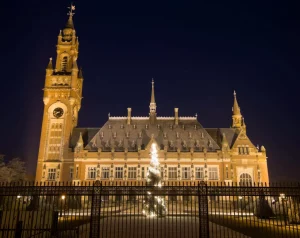
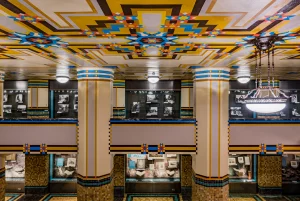
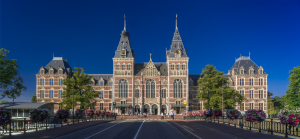
Our seminar locations are always chosen to promote the learning experience. In our Netherlands locations, this can only mean tradition-dripping, beautiful places, as only Amsterdam and The Hague can offer (representative samples shown).
Beyond the Classroom
Everything that happens during an EverScholar program is enhanced by the fact that it takes place in a learning-promoting environment.
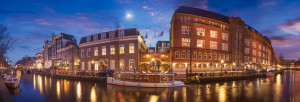
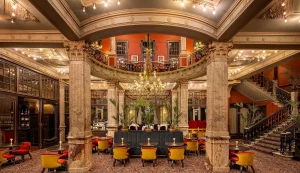
Our hotels in the Netherlands are not only 5-star; they are dripping with historical and cultural significance. The Grand Hotel Sofitel Amsterdam was the Dutch Admiralty headquarters during – you guessed it – the Dutch Golden Age, was the Amsterdam City Hall for two centuries, and remains a jewel of architecture and hospitality. In The Hague, the Hotel Des Indes is similarly an architectural and historic landmark, the site of an 1899 peace conference, as well as the host to a dizzying array of luminaries including Tsar Nicholas II, Mata Hari, Winston Churchill, Anna Pavlova, The Rolling Stones – and now, you.
Learn more about the experience!
The course begins with an opening reception and dinner (with our faculty, as will be the norm throughout the program) on Saturday, October 10 in Amsterdam and ends Sunday October 18. We will stay at luxury hotels in Amsterdam and The Hague with the option for single or double rooms subject to availability.
Pricing will be announced when registration opens. EverScholar offers double occupancy housing, with single supplements offered subject to availability. Deposit of $2,000 per person is due at registration. Balance is due on June 1, 2026. This EverScholar program includes all seminar sessions, housing, meals, readings, transportation (except airfare to and from Amsterdam), and site visits. There may be limited spots to bring a companion/guest; details and costs for this are described on registration page. Cancellation refund and COVID-19 refund policies are detailed on the registration page – so you can register without worries. We look forward to seeing you in the Netherlands!