

Events
-
-
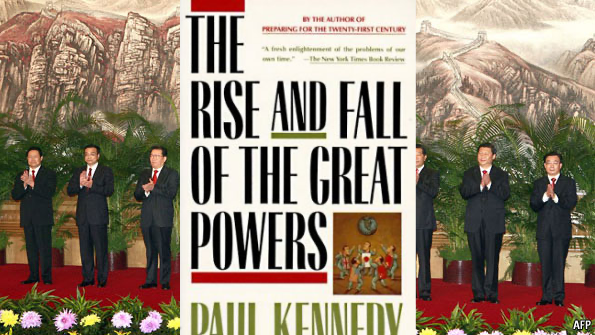
The Rise and Fall of Great Powers, including China and the U.S., in historical perspective
Paul Kennedy's book, The Rise and Fall of the Great Powers : Economic Change and Military Conflict from 1500 to 2000, a magisterial survey of European imperial competition, was published in 1987. It made a considerable impression in both academic and policy circles, because of its brilliant synthesis of modern history, and because of [...]
Free -
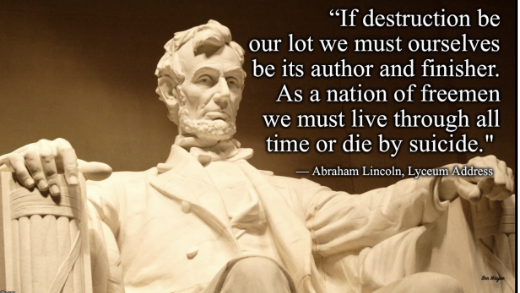
Lincoln’s “Lyceum Speech” – Demagogues and Aspiring Tyrants (Section 1)
Professor Steven B. Smith, Alfred Cowles Professor of Government and Philosophy. What is a demagogue and what is the source of their authority? These questions are at the core of Abraham Lincoln’s speech “On the Perpetuation of Our Political Institutions” given at the Young Men’s Lyceum in Springfield, Illinois in 1838 when the author was just a few weeks short of his twenty-ninth birthday. Lincoln here raises the problem of the aspiring tyrant but who exactly is he referring to and what is he afraid of? Among other themes we will consider from this first great speech of Lincoln’s are the relation of later generations to the American founding, the fragility of law, the role of religion in maintaining political institutions, and the loss of historical memory.
Free -
Lincoln’s “Lyceum Speech” – Demagogues and Aspiring Tyrants (Section 2)
Professor Steven B. Smith, Alfred Cowles Professor of Government and Philosophy. What is a demagogue and what is the source of their authority? These questions are at the core of Abraham Lincoln’s speech “On the Perpetuation of Our Political Institutions” given at the Young Men’s Lyceum in Springfield, Illinois in 1838 when the author was just a few weeks short of his twenty-ninth birthday. Lincoln here raises the problem of the aspiring tyrant but who exactly is he referring to and what is he afraid of? Among other themes we will consider from this first great speech of Lincoln’s are the relation of later generations to the American founding, the fragility of law, the role of religion in maintaining political institutions, and the loss of historical memory.
Free -
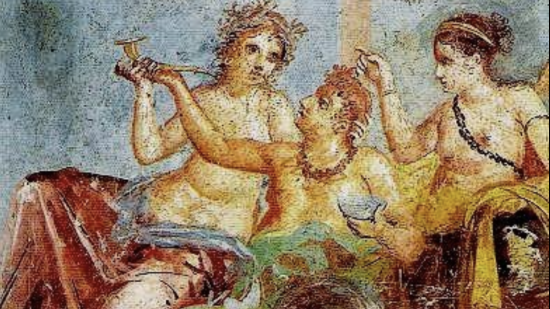
Satire and Free Speech in Ancient Rome
This seminar will offer an overview of issues of humorous free speech in ancient Rome, focusing on the verse satirists Lucilius, Horace, Persius and Juvenal, as well as Petronius, author of the Satyricon (a bawdy and irreverent novel mixing prose with verse). The satires written by these writers tested the boundaries of what could [...]
Free -
-

How to Read a Case: McCulloch v. Maryland (Section 1)
What does the Constitution say? What tools do we have to discern its meaning? Americans ask these questions, or variants of them, when they consider fundamental issues of the day. Lawyers, in particular, require methods to address these issues; in law school they are taught to utilize case reading and analysis. Professor Akhil Amar [...]
Free -
How to Read a Case: McCulloch v. Maryland (Section 2)
What does the Constitution say? What tools do we have to discern its meaning? Americans ask these questions, or variants of them, when they consider fundamental issues of the day. Lawyers, in particular, require methods to address these issues; in law school they are taught to utilize case reading and analysis. Professor Akhil Amar [...]
Free -
-
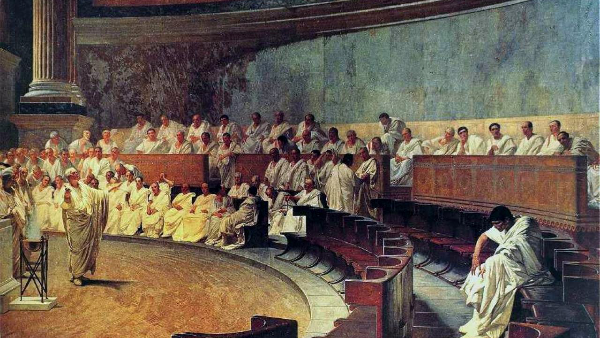
Failure in, and of, Political Oratory (Section 1)
Other realms of verbal art embrace failure as part of the creative practice; Samuel Beckett’s adage “fail better” springs to mind (the flawed novel; the play with a weak third act; the half-good poem). By contrast, political oratory leaves little scope for interesting failure. This seminar will focus on two related topics: the historical [...]
Free -
Failure in, and of, Political Oratory (Section 2)
Other realms of verbal art embrace failure as part of the creative practice; Samuel Beckett’s adage “fail better” springs to mind (the flawed novel; the play with a weak third act; the half-good poem). By contrast, political oratory leaves little scope for interesting failure. This seminar will focus on two related topics: the historical [...]
Free -
Failure in, and of, Political Oratory (Section 3)
Other realms of verbal art embrace failure as part of the creative practice; Samuel Beckett’s adage “fail better” springs to mind (the flawed novel; the play with a weak third act; the half-good poem). By contrast, political oratory leaves little scope for interesting failure. This seminar will focus on two related topics: the historical [...]
Free -
-
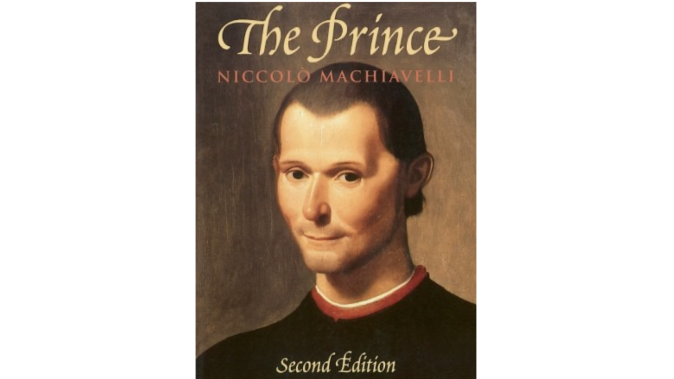
Machiavelli’s “The Prince” and Executive Power (Section 1)
Professor Steven B. Smith, Alfred Cowles Professor of Government and Philosophy. Machiavelli’s Prince is the most famous political book ever written and yet it remains one of the most contested. Was he the evil “Machiavel” of Elizabethan literature, a teacher of the dark arts of political duplicity and deception, or was he prophet of political liberation and maybe even democracy as more recent interpreters have argued? Machiavelli is the writer who puts executive power at the center of his political thinking. In this seminar we will consider Machiavelli’s role in creating the idea of the modern executive and how this has entered American political debate.
Free -
Machiavelli’s “The Prince” and Executive Power (Section 2)
Professor Steven B. Smith, Alfred Cowles Professor of Government and Philosophy. Machiavelli’s Prince is the most famous political book ever written and yet it remains one of the most contested. Was he the evil “Machiavel” of Elizabethan literature, a teacher of the dark arts of political duplicity and deception, or was he prophet of political liberation and maybe even democracy as more recent interpreters have argued? Machiavelli is the writer who puts executive power at the center of his political thinking. In this seminar we will consider Machiavelli’s role in creating the idea of the modern executive and how this has entered American political debate.
Free -
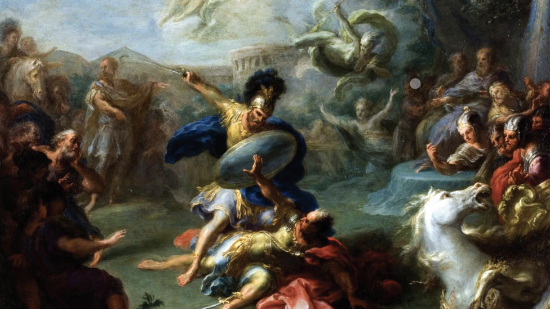
The 12th book of Virgil’s Aeneid – A Close Reading, with Recent Scholarship
This seminar will offer participants the chance to reconnect with one of the ancient world’s most famous poems, Virgil’s classic epic on the adventures of Aeneas. The seminar’s participants are asked to read (or to refamiliarize themselves with) the epic in its entirety. But the seminar itself will focus largely (though not exclusively) on [...]
Free