

Events
-
-
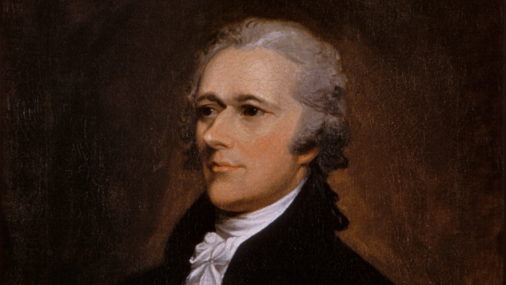
Seven Federalist Papers
Professor Akhil Reed Amar, Sterling Professor of Law and Political Science, Yale University. NOTE: This seminar is full! Please register for Section 2 of this topic, to be held on Tuesday July 21 5:00-6:30 EDT. In its day, the Federalist was no book; it was a series of articles, published piecemeal over the long, glorious year of ratification debates. It was part of a great argument, and was meant not as a reference for posterity, but as persuasive material for a vote. It was perhaps the first political blog. In this seminar we will read seven of these editorials, and analyze them from the points of view of its intended readers. Join us, and re-enter the debate of that miraculous year, when America constituted itself.
Free -
Seven Federalist Papers (Session 2)
Professor Akhil Reed Amar, Sterling Professor of Law and Political Science, Yale University. In its day, the Federalist was no book; it was a series of articles, published piecemeal over the long, glorious year of ratification debates. It was part of a great argument, and was meant not as a reference for posterity, but as persuasive material for a vote. It was perhaps the first political blog. In this seminar we will read seven of these editorials, and analyze them from the points of view of its intended readers. Join us, and re-enter the debate of that miraculous year, when America constituted itself.
-
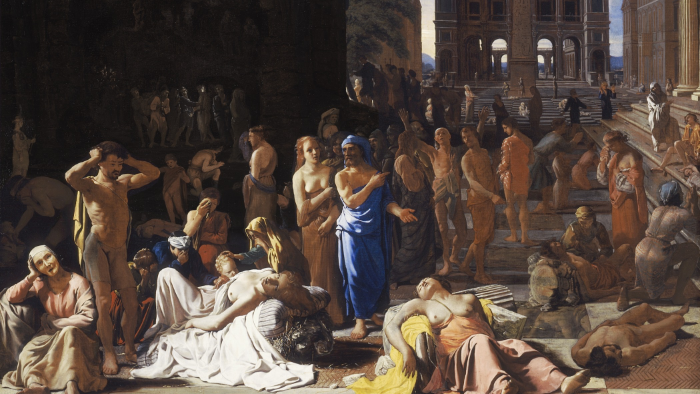
Thucydides’ Plague, and Ours (Section 1)
Emily Greenwood, Professor of Classics and Director of Graduate Studies, Yale University. Thucydides’ account of the plague that struck Athens in 430 BCE is recalled / rediscovered whenever nations in the West experience a global epidemic or pandemic. The seminar will offer an opportunity to get to grips with the interpretation of this complex passage and to engage with debates in current scholarship. Moreover, the context for our reading – in the midst of a pandemic – means that we are well placed to notice certain details in Thucydides’ account, such as his focus on the altered experience of temporality during an epidemic.
Free -
Thucydides’ Plague, and Ours (Section 2)
Emily Greenwood, Professor of Classics and Director of Graduate Studies, Yale University. Thucydides’ account of the plague that struck Athens in 430 BCE is recalled / rediscovered whenever nations in the West experience a global epidemic or pandemic. The seminar will offer an opportunity to get to grips with the interpretation of this complex passage and to engage with debates in current scholarship. Moreover, the context for our reading – in the midst of a pandemic – means that we are well placed to notice certain details in Thucydides’ account, such as his focus on the altered experience of temporality during an epidemic.
Free -
Thucydides’ Plague, and Ours (Section 3)
Emily Greenwood, Professor of Classics and Director of Graduate Studies, Yale University. Thucydides’ account of the plague that struck Athens in 430 BCE is recalled / rediscovered whenever nations in the West experience a global epidemic or pandemic. The seminar will offer an opportunity to get to grips with the interpretation of this complex passage and to engage with debates in current scholarship. Moreover, the context for our reading – in the midst of a pandemic – means that we are well placed to notice certain details in Thucydides’ account, such as his focus on the altered experience of temporality during an epidemic.
-
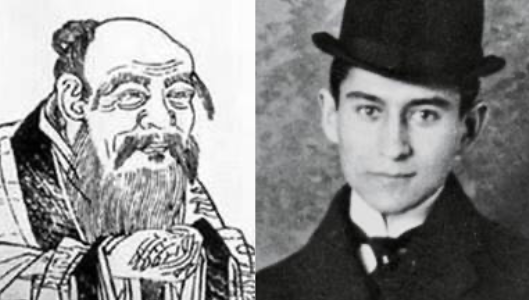
Chinese Classics for German Modernity: Laozi to Kafka
The first two decades of the twentieth century defined a new global cultural formation, which we now call “modernity.” Rejecting the historicist assumptions of the nineteenth century, leading writers around the world developed new visions of the future, new approaches to human psychology, and new forms of spiritual cultivation. Germany and the Austro-Hungarian empire [...]
Free